
Can I use existing scales in a dissertation? This is one of the most common questions students ask when planning their research methodology. Using established scales, surveys, and questionnaires can improve the reliability and validity of your study while saving valuable time during data collection. However, before incorporating an existing research instrument into your dissertation, it is important to understand the copyright, licensing, citation, and ethical requirements involved. In this guide, we’ll explore when and how you can use existing scales in a dissertation, the permissions you may need, and the best practices for ensuring academic integrity throughout your research.
The answer is generally yes, but there are important copyright, licensing, and ethical considerations you must understand before including any existing instrument in your research. Failure to obtain the necessary permissions or properly acknowledge the original author can lead to academic integrity issues and potential copyright violations. This guide explains everything dissertation students need to know about using published scales and surveys responsibly.
Why Students Use Existing Scales in Dissertation
Researchers often prefer validated scales because they have already been tested for reliability and accuracy. Using a recognized instrument can strengthen the credibility of your dissertation and make it easier to compare your findings with previous studies.
Common examples include:
- Customer satisfaction surveys
- Employee engagement scales
- Mental health assessment tools
- Leadership and organizational behavior scales
- Healthcare and patient satisfaction questionnaires
- Educational assessment instruments
These tools provide a standardized way to collect and analyze data, making research findings more meaningful and academically acceptable.
Understanding Copyright and Survey Ownership
Many students assume that because a scale or questionnaire appears in a published journal article, it is free to use. This is not always true.
Some instruments are:
Public Domain
These scales can generally be used without permission, although proper citation is still required.
Copyright-Protected
The author or publisher retains ownership rights. Researchers may need written permission or a license before using the instrument.
Commercially Licensed
Certain surveys require payment or formal authorization before use, especially in healthcare, psychology, and business research.
Before using any scale, carefully review the original publication and the author’s instructions regarding usage rights.
How to Determine Whether Permission Is Required
Before incorporating a survey into your dissertation, consider the following steps:
Review the Original Research Paper
Check whether the publication mentions:
- Usage restrictions
- Copyright information
- Licensing requirements
- Contact details for permissions
Visit the Author's Website
Many researchers provide guidance regarding the use of their instruments on personal or institutional websites.
Contact the Author Directly
If no information is available, sending a professional email requesting permission is often the best approach.
Check Publisher Policies
Some publishers manage copyright permissions on behalf of authors and provide online request systems.
Ethical Considerations When Using Existing Instruments
Even if copyright permission is not required, ethical responsibilities still apply.
Proper Citation
Always acknowledge the original creator of the scale in your dissertation. Citations should appear in:
- Literature review
- Methodology chapter
- Reference list
Avoid Unauthorized Modifications
Changing survey questions without justification can affect the validity of the instrument. If modifications are necessary, clearly explain and justify them in your methodology.
Maintain Research Integrity
Researchers should use instruments in a way that preserves their intended purpose and measurement accuracy.
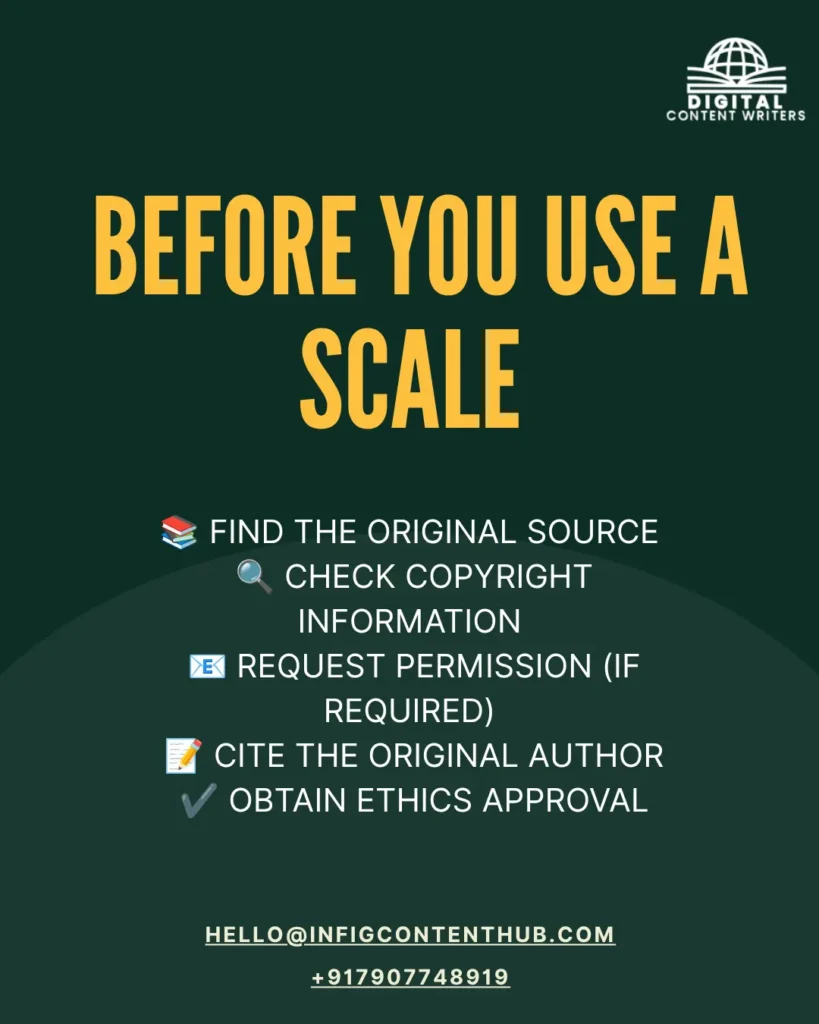
Obtain Ethics Approval
If your university requires ethics approval for data collection, disclose the use of external scales and surveys in your application.
What Happens If You Use a Survey Without Permission?
Using a protected instrument without authorization can create several problems:
- Copyright infringement
- Rejection by ethics committees
- Academic misconduct concerns
- Publication restrictions
- Requests to remove data collected using unauthorized tools
These issues can delay your dissertation and negatively affect your academic progress.
Best Practices for Dissertation Students
To avoid legal and ethical complications, follow these best practices:
- Verify ownership before use.
- Check licensing and permission requirements.
- Obtain written approval when necessary.
- Cite the original source correctly.
- Avoid altering validated instruments without justification.
- Maintain records of all permissions obtained.
- Follow your university’s ethics guidelines.
Taking these steps demonstrates professionalism and academic integrity.
Conclusion
Using existing scales and surveys in dissertation research can enhance the reliability and credibility of your study, provided you follow the necessary copyright, licensing, and ethical requirements. Before incorporating any research instrument into your dissertation, it is essential to verify permission requirements, cite the original source correctly, and comply with your university’s research ethics guidelines.
However, identifying suitable scales, obtaining permissions, developing a sound methodology, and ensuring academic compliance can often be challenging for students. If you need expert guidance throughout your dissertation journey, DCWI‘s professional dissertation writing services can help. From topic selection and literature reviews to research design, data analysis, and final editing, our experienced academic experts provide comprehensive support to help you complete a high-quality dissertation with confidence.
Frequently Asked Questions
Yes, but you should first determine whether the instrument is protected by copyright or requires permission.
Yes. Proper citation is essential even when permission is not required.
You can, but modifications should be justified and discussed in your methodology because they may affect validity and reliability.
Check publisher guidelines and institutional resources. If permission requirements remain unclear, consult your supervisor or ethics committee before proceeding.
No. Some instruments are free, while others require licenses, fees, or written authorization.